Say whatkeeps you up.
Whisper the sentence you couldn’t say in daylight. Fideya listens without judgment.
Tap the one that feels close
Sample conversation
- You
I wrote the message and deleted it. Then I wrote it again.
- Fideya
Which sentence was the hardest to delete?
- You
The one where I said I miss you.
- Fideya
You can leave that sentence here. There’s no hurry.
- You
I miss you. But I’m not the same person anymore.
When you finish, a mirror stays.
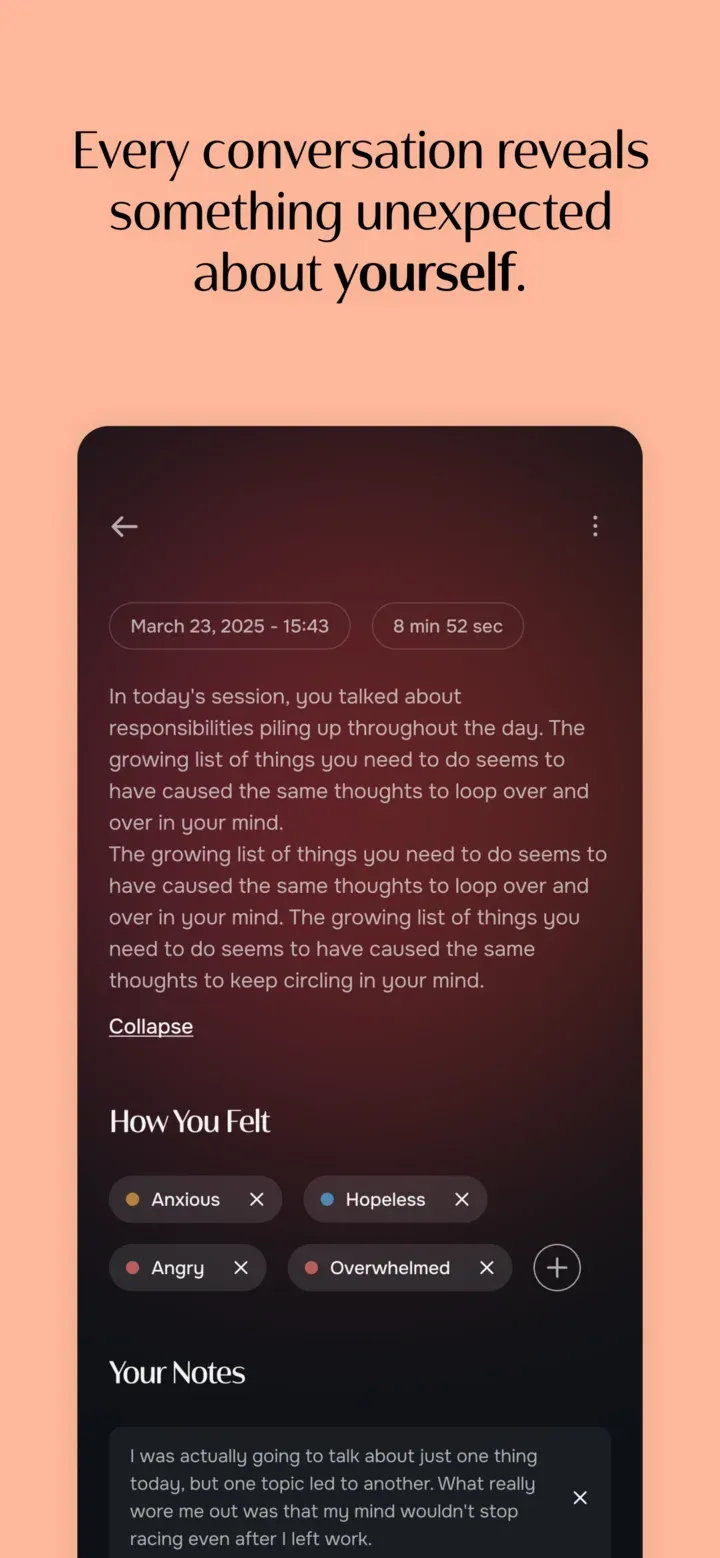
It doesn’t cut you off. When you’re done you get a short, honest reflection: not a slogan, your own words. Take out the feeling that doesn’t fit, add the one that’s missing.
Try changing the feelings here.
Tonight you talked about writing and deleting the same message. What stopped you was saying that you miss someone. By the end you said it yourself: missing someone and wanting to go back are not the same thing.
How you felt
- Hurt
- Thoughtful
- Lonely
- Relieved
- Understood
- Calm
- Confused
- Peaceful
Your notes
Tomorrow I won’t open that message again.
Tone, pace, feel: shaped around you.
A soft voice today, someone more direct tomorrow. You choose the color too; the one you try changes the light on this page.
There is no wrong topic here.
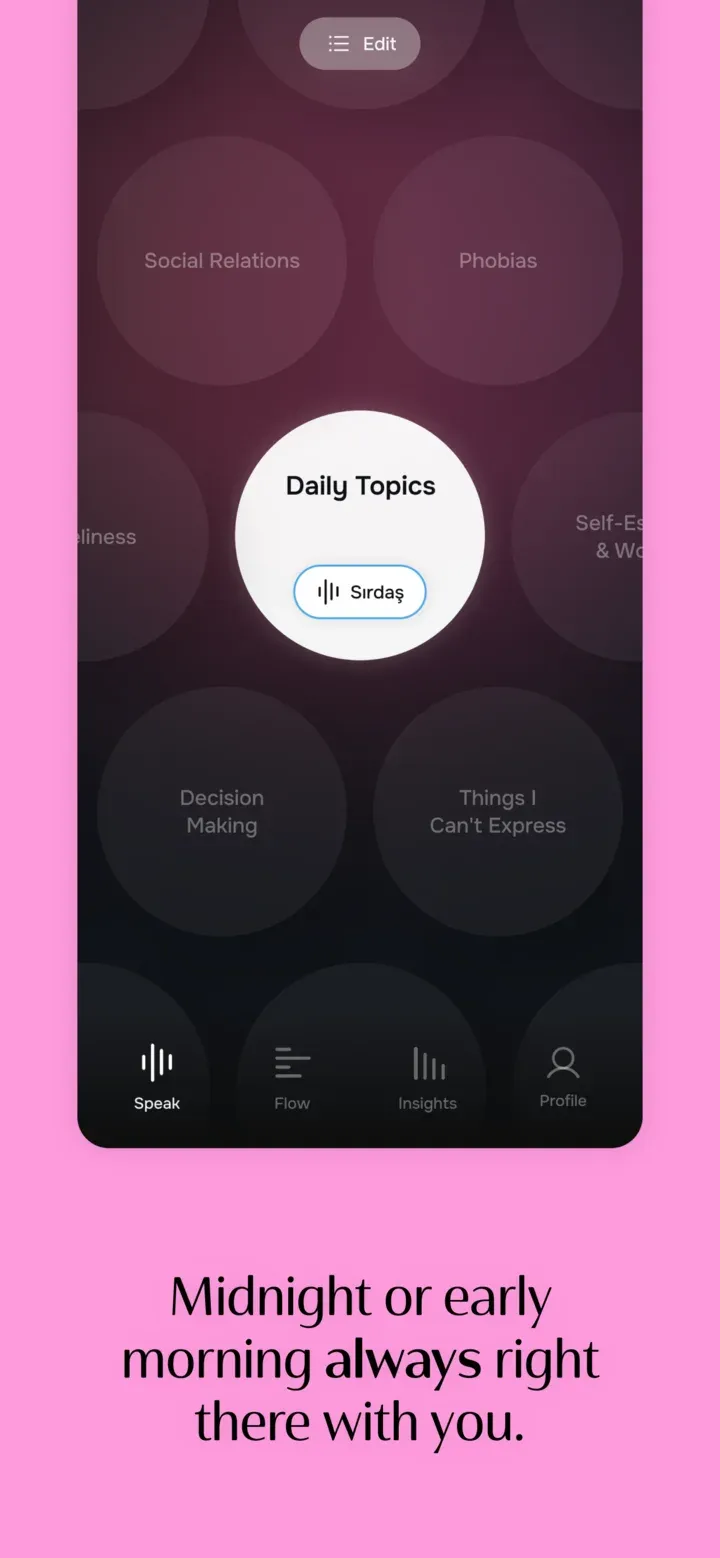
Drag the topics and bring one to the center. This is how a conversation starts in the app.
A chat has a voice too.
If a conversation keeps spinning in your head, export it from WhatsApp and look at it together with Fideya. It doesn’t pick winners and losers; it makes the patterns and the silences visible.
- You export the chat.
- Names and numbers are hidden on your device.
- The shape of the chat appears.
You hold the lock.
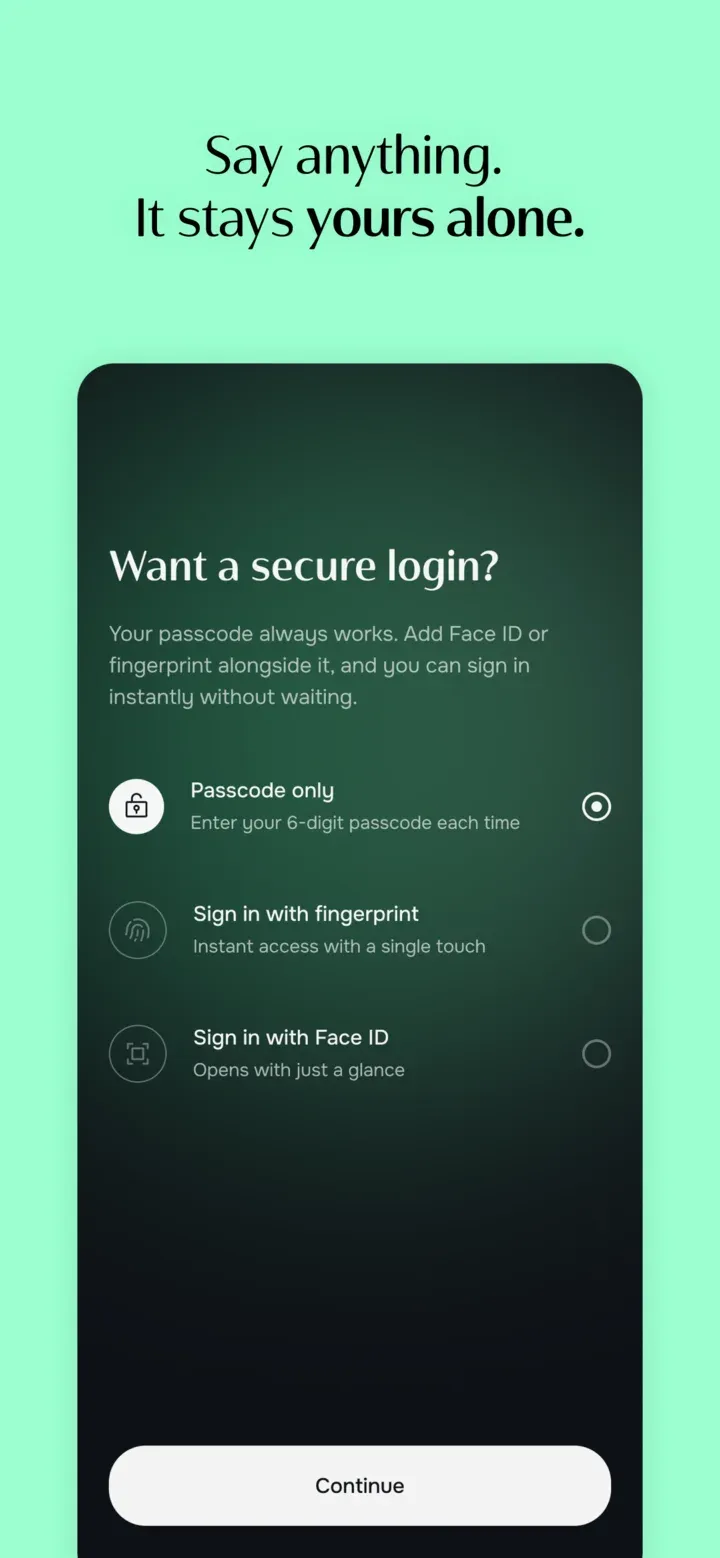
Choose a six-digit passcode and close the notebook. Try it here: it doesn’t matter which digits you press.
We don’t know your name
No name, email or phone number. A nickname is enough.
The key is on your device
Your conversations are encrypted with a key created on your device. Only your recovery code brings your account back.
Deleted means gone
Delete a conversation or your whole account from inside the app, whenever you want.
To produce a reply, your conversation is sent to the AI systems of Google, OpenAI and Anthropic without your name or identity. It is not used as training data and not stored in a way that is linked to you.
When you close it, the notebook closes.
Every week, a recap of you.
How long you talked, what you felt most, which topics you kept returning to. Fideya fits your week into a few cards.

This week
142
minutes, 6 talks

You felt mostly
Thoughtful
then Hurt, then Relieved

This week
Love, work, sleep
were what you talked about

Your mode this week
Night thinker
mostly between 00:00 and 02:00
Sample recap
Questions you may have
Does Fideya replace therapy?
No. Fideya is not a therapy app; it doesn’t diagnose, prescribe or handle a crisis. If you need serious mental-health care, seek professional help. If you’re thinking of harming yourself or someone else, call your country’s emergency number.
Do I have to say who I am to sign up?
No. No name, email or phone number. A nickname and a six-digit passcode are enough.
Where does what I say go?
Your conversations are encrypted with a key created on your device. To produce a reply, the content is sent to Google, OpenAI and Anthropic without your identity, and is not used for training. Details are in the Privacy Policy.
Can I type instead of talking?
Yes. Switch to text or back to voice whenever you like. Both live in the same notebook.
What if I change phones?
The recovery code you get at sign-up is the only key to your account. Keep it somewhere safe and use it on your new phone.
Is it free?
Downloading is free. Paid plans inside the app unlock longer conversations and detailed analyses.
Are Fideya and Sırdaş the same app?
Yes. It is called Sırdaş in Türkiye and Fideya everywhere else.
It’s morning. A little lighter.
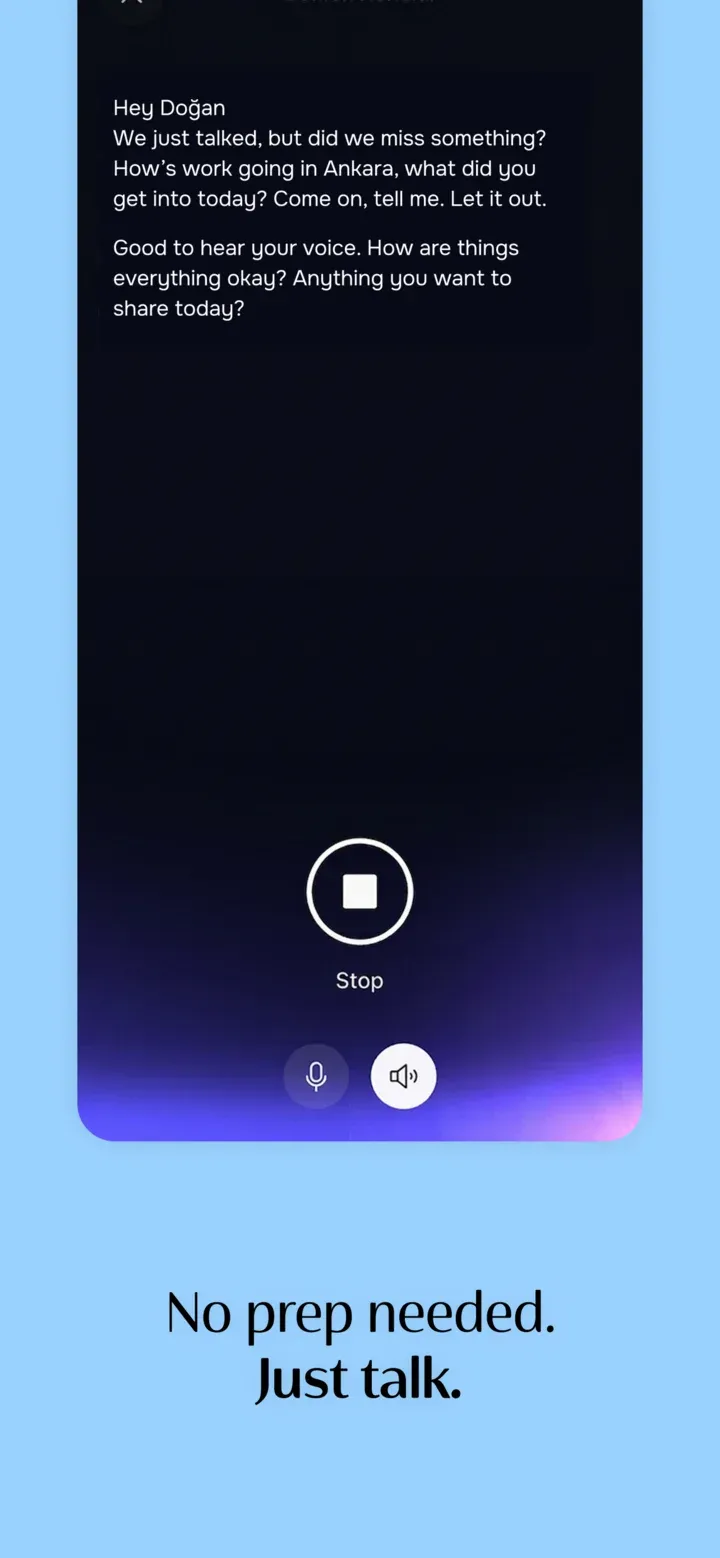
Midnight or early morning, right there with you. No prep needed. Just talk.